Most insurance accepted. Click for details


The Alta Mira residential substance use disorder treatment programs were designed by renowned specialists who are among the best in their respective fields.
Most insurance accepted. Click for details
The Alta Mira residential substance use disorder treatment programs were designed by renowned specialists who are among the best in their respective fields.
Perhaps the hardest part about being a parent is finding the line between protecting your child and letting them learn on their own. Do you catch them every time they stumble, or do you let them fall so they can get back up?
Even when your child is older, you want to help them in their life, but you may lean more toward letting them make their own decisions. It’s a natural balancing act, but one which may put you in the precarious position of having to make extremely difficult decisions when you suspect your child may be abusing prescription drugs. After all, if your child has a legitimate need for prescription drugs, asking them about addiction or pressuring them about the use could be pointless at best, or damaging at worst.
Yet ignoring the possibility could exacerbate the problem—especially if the addiction you suspect turns out to be a reality.
The job of a parent might change as their child gets older, but it never ends. But by recognizing the signs of prescription drug addiction, and helping them get into the treatment program they need, you can continue to support your child by helping them find the strength to help themselves.
Perhaps your daughter hurt herself at work. Perhaps, after coming home from Afghanistan, your son suffered splitting headaches. Or perhaps your child simply needed help concentrating at work. The drugs prescribed by doctors seem to alleviate these and many other problems, and so you and your child may well be grateful for them. The problem starts when prescription turns into dependency, which quickly descends into a spiral of addiction.
If this is the case, your adult child is not alone. It is estimated that nearly 54 million Americans have misused medical drugs, which fall into three main categories: opioids, CNS depressants, and stimulants. Of these, opioid addiction is the most prevalent. Indeed, the US makes up for 80% of the world’s opioid use, and a similar percentage of its abuse. Indeed, over the last 20 years, deaths from opioid abuse alone have risen 5-fold, accounting for over 60,000 fatalities in 2016 alone. It’s scary.
So why is it so hard to recognize? Because you aren’t always with your adult child. Because some of their symptoms are getting better, and so the negatives are emotionally harder to deal with. Because addiction rarely comes on all at once, but develops gradually, insidiously, often taking hold before even the person using realizes what’s happening.
The most difficult part might be that you don’t want to make assumptions about your child’s life. You don’t want to interfere or treat them like a child. And it’s all too easy, as a parent, too look on your child with optimism-tinted glasses; no parent wants to believe their child is addicted to drugs.
But if you recognize the signs of addiction, it is important to try to get help as soon as possible, both for the sake of your child and that of your family.
Though no one is immune, there are some people who are at more risk than others of falling into dependency and abuse. Some of the most commonly recognized risk factors include:
Of course, none of these guarantee addiction, just as the lack of them doesn’t promise prevention. Everyone is different and has a different experience. But that doesn’t mean that some of the signs aren’t the same.
Some of the most common signs of prescription drug abuse include:
The last one is key to the problem: most adults know that their abuse is bad, and they don’t want to talk about it. They will stop talking about usage altogether, whereas before they may have been open about its benefits. Indeed, if your son or daughter is no longer talking about their prescription drug use, it might be the most important sign that it is time to really talk about it.
(Note: different kinds of prescription drugs have different physical and mental signs. For a more comprehensive list, please read our prescription drug information page.)
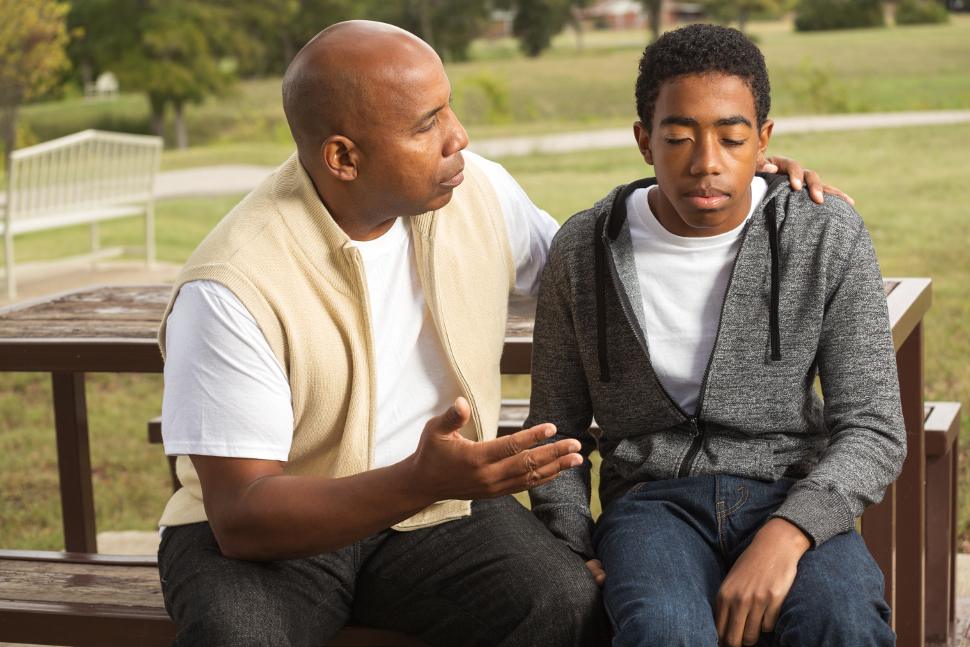
If you have recognized the signs, it is a great chance to intervene. Chances are, your child will resist at first, and won’t want to talk about it. They may feel ashamed, or even angry at you for bringing it into the light. That’s normal.
Despite the current epidemic of prescription drug abuse in our country, many people still feel alone, or feel like they have let their loved ones down. Nothing could be further from the truth. Talking to your son or daughter about their addiction with compassion and understanding, and without condemnation, is the best way to get them the help they need.
Your adult child will most likely need long-term care at a clinic that specializes in prescription drug abuse, and treating it in a comprehensive and compassionate manner. This kind of treatment is especially effective with prescription drug abuse, where there are complex reasons for the addiction. It can’t be solved overnight, either physically or mentally. The underlying reasons for the prescription also have to be taken into account.
You will always want to protect your child, even as you let them live their own life. But letting them make their own decisions doesn’t mean standing by when the overprescription and overuse of certain drugs rob them of their rational decision-making process. Recognizing the signs, and getting them the help they need, isn’t overparenting. It’s helping them regain control over their own life.
Alta Mira offers comprehensive treatment for people struggling with drug and alcohol addiction as well as co-occurring mental health disorders and process addictions. Contact us to learn more about our renowned Bay Area programs and how we can help you or your loved one start the journey toward lasting recovery.